
Razzmatazz
By Michael Mueller
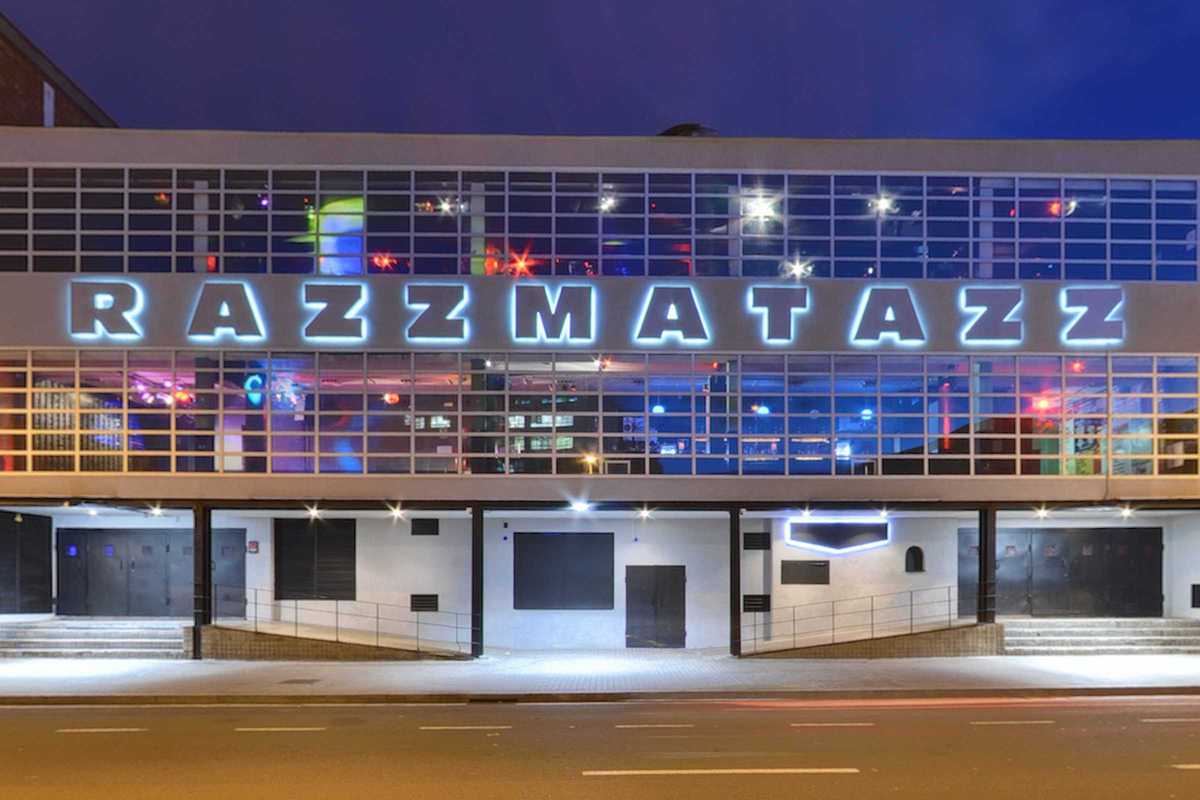
Name your club after a Pulp song and invite the band to its first birthday. Razzmatazz did both, an indie-kid beginning for a place whose musical appetites stretch from techno to reggaeton. Opened in December 2000 with The Flaming Lips, the Poblenou venue took over the site of Sala Zeleste, which had moved here in 1986. Founder Daniel Faidella, a promoter from the Zeleste era, carried that live-music lineage into a rather expansive new chapter.
The setting helps explain the scale: two former industrial buildings, an engine factory and a textile-processing warehouse, connected by a labyrinth of stairways and passages. There are five independent rooms, now numbered, with room for roughly 2,000 in the main hall and a couple of hundred in the third. One club ticket covers them all. If the first room isn’t working, there are four more to try.
Electronic tastes have plenty to work with. Human ranges through techno, house, electro and breaks, while Torax keeps its focus on techno. Elsewhere in the program, Fuego brings rap, dembow and afrobeats, El Dirty hits and reggaeton and Common People indie and Britpop. Common People, fittingly, keeps the Pulp connection alive. Check the program before choosing a night – these are parties with different musical loyalties, not permanent genres assigned to rooms.
Concerts have a life of their own, with around 500 a year and separate tickets. Arctic Monkeys and LCD Soundsystem played early shows here; Björk gave a secret show in 2003. It’s also a regular stop for Primavera Sound’s city concerts. The club crowd is young and international, with entry for ages 18 and over and photo ID required. Leave the football shirt and flip-flops at home. Bring a little musical curiosity.